Definitive Guide

Semaglutide Explained

How This GLP-1 Medication Helps With Weight Loss

Semaglutide has become one of the most talked-about medical treatments for weight loss in recent years. It’s a GLP-1 receptor agonist, and the active ingredient in medications such as Wegovy, Ozempic, and Rybelsus.

In this guide Medicspot’s clinicians explain everything you need to know about semaglutide for weight management.


Clinical experts in weight management

NICE and MHRA approved medications

Behaviour change course and coaching included

What are semaglutide injections and how do they work?

Semaglutide has become one of the most talked-about medical treatments for weight loss in recent years. It is the active ingredient in medications such as Wegovy, Ozempic, and Rybelsus, and it has changed how doctors approach obesity and metabolic health.

For many people, traditional diet and exercise plans have not been enough to keep weight off long term. Semaglutide works differently. It helps your body regulate hunger and fullness at a biological level rather than relying only on willpower.

What this means is that healthy eating and lifestyle changes become easier to sustain because your appetite and cravings begin to work with you instead of against you.

This page explains what semaglutide is, how it works inside the body, what the evidence shows, and what you should know if you are considering it as part of a supervised weight loss plan.

What is semaglutide?

Semaglutide is a laboratory-made version of a natural hormone called GLP-1, short for glucagon-like peptide-1. Your body releases GLP-1 after you eat to help control blood sugar and signal to the brain that you are full.

Scientists created a longer-lasting version of this hormone so that it stays active in the bloodstream for an entire week. That is essentially what semaglutide is: a hormone mimic that keeps those helpful signals going for longer.

In simple terms, semaglutide helps your body feel satisfied sooner and for longer, steadies blood-sugar levels, and reduces cravings. Think of it as gently turning down the volume on hunger signals that have been too loud for too long.

It belongs to a class of medicines called GLP-1 receptor agonists. These are used to treat both type 2 diabetes and obesity, and all work by copying and enhancing the effects of your body’s natural GLP-1 hormone.

Semaglutide is the active molecule in the branded medicines Wegovy, Ozempic, and Rybelsus, all produced by Novo Nordisk. Each brand contains the same molecule but uses a different delivery system and has slightly different clinical uses.

How semaglutide works in the body

To understand semaglutide, imagine your body’s appetite system as a conversation between your stomach, pancreas, and brain. The hormone GLP-1 acts as a messenger that tells the brain, “We have eaten enough, time to slow down.”

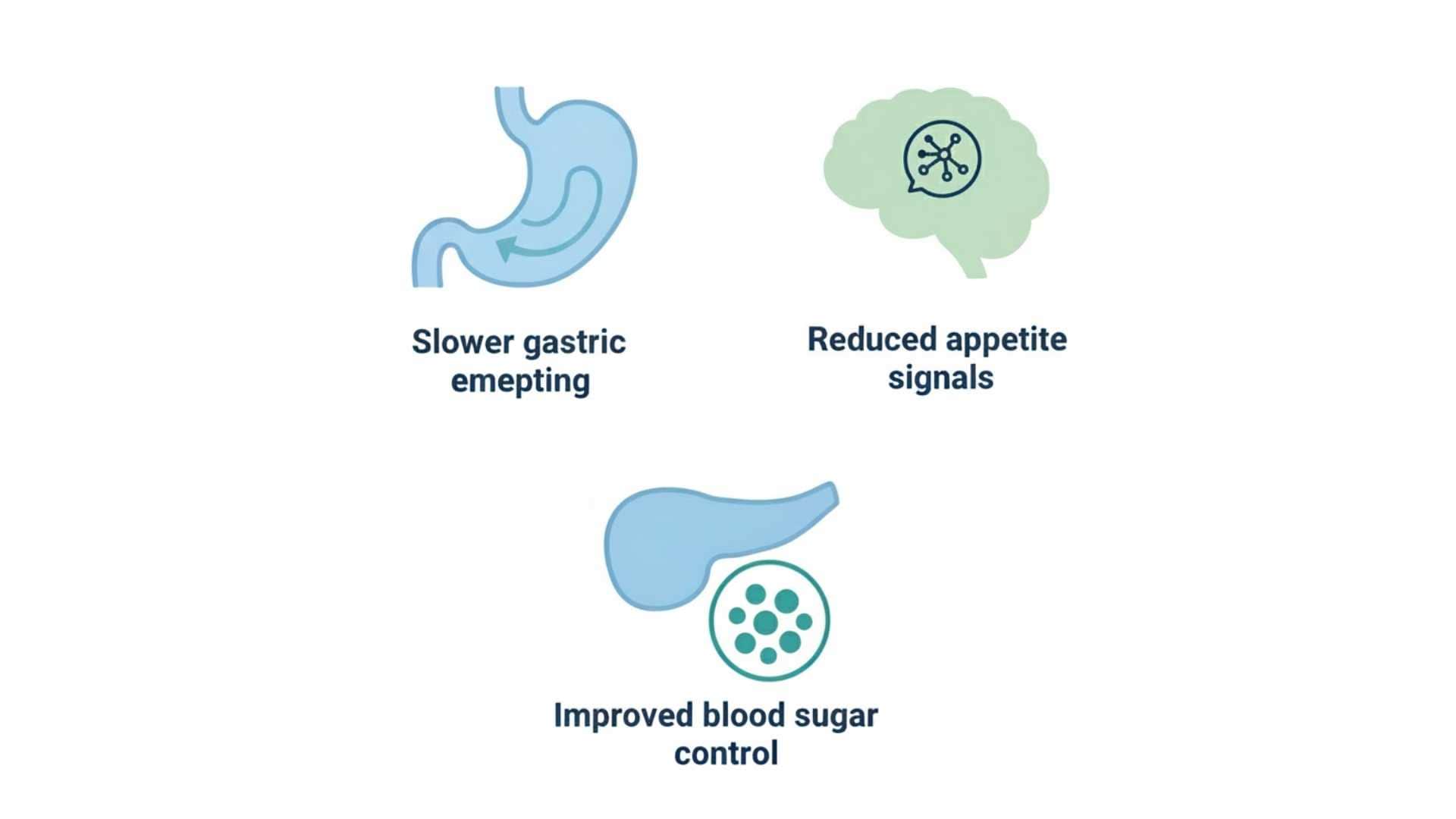
Semaglutide binds to GLP-1 receptors in three main areas:

  • Pancreas – It increases insulin release in response to food and reduces glucagon (a hormone that raises blood sugar).
  • Stomach and intestines – It slows down how quickly food leaves the stomach, which helps you feel full sooner and for longer.
  • Brain (hypothalamus) – It dampens hunger signals and reduces food cravings.

Together, these actions lead to a lower calorie intake, improved blood-sugar control, and gradual, sustained weight reduction.

Essentially, semaglutide helps your body return to a healthier rhythm of hunger and fullness. The upshot is that you eat less without feeling deprived or constantly thinking about food.

People often describe it as feeling “reset.” Meals satisfy them again, and the mental noise around eating quietens down. That shift, combined with lifestyle support, can lead to steady and meaningful weight loss over time.

Clinical evidence and major trials

Semaglutide’s approval is based on a large body of high-quality research, including the SUSTAIN trials for diabetes and the STEP trials for obesity.

Key findings include:

  • STEP-1 trial (NEJM 2021): Average weight loss of 14.9% after 68 weeks versus 2.4% in the placebo group.
  • SUSTAIN-6 trial (NEJM 2016): 20% reduction in major cardiovascular events in people with type 2 diabetes.
  • STEP-5 trial (Diabetes Care 2021): Confirmed that weight loss results remain durable over two years with continued treatment.

Across studies, participants also saw improvements in blood pressure, cholesterol, and blood-sugar control.

What this means in everyday terms is that semaglutide helps reset the body’s appetite and metabolism in a way that can protect against diabetes and heart disease while promoting weight loss.

Medical indications and eligibility

In the United Kingdom, semaglutide is approved by the MHRA and recommended by NICE for two main uses:

  • Type 2 Diabetes – To improve blood-sugar control when diet and exercise alone are not enough. Branded as Ozempic (weekly injection) or Rybelsus (daily oral tablet).
  • Chronic Weight Management – For adults with a BMI of 30 or higher, or 27 or higher with a related health condition such as high blood pressure or high cholesterol. Branded as Wegovy (weekly injection).

NICE guidance NG248 (2023) supports its use for eligible patients under specialist supervision.

Semaglutide should only be prescribed by a qualified clinician who can assess whether it is appropriate and monitor treatment safely.

Different forms and brand variations

Although all three medicines contain the same active molecule, they differ in how they are taken and what they are licensed for.

Wegovy

  • Form: Weekly injection
  • Typical dose range: 0.25 mg to 2.4 mg
  • Primary use: Weight management
  • UK availability: Available privately

Ozempic

  • Form: Weekly injection
  • Typical dose range: 0.25 mg to 1 mg
  • Primary use: Type 2 diabetes (sometimes prescribed off-label for weight loss)
  • UK availability: NHS and private

Rybelsus

  • Form: Daily oral tablet
  • Typical dose range: 3 mg to 14 mg
  • Primary use: Type 2 diabetes
  • UK availability: NHS and private

Injectable forms are absorbed more efficiently and tend to have slightly stronger results, while tablets offer convenience for those who prefer not to inject. In both cases, the active ingredient is identical.

If you would like to learn more about each format, see our guides to semaglutide injections and semaglutide tablets.

Safety, side effects, and contraindications

Most side effects occur early in treatment and fade as the body adjusts. Common ones include:

  • Nausea, bloating, or vomiting
  • Constipation or diarrhoea
  • Early fullness or reduced appetite
  • Tiredness or dizziness during dose changes

These effects happen because semaglutide slows digestion. Clinicians use a gradual dose-increase schedule to reduce discomfort.

Serious but uncommon side effects include pancreatitis and gallbladder inflammation. Animal studies found thyroid C-cell changes, but this has not been confirmed in humans.

Semaglutide should not be used by people with:

  • A personal or family history of medullary thyroid carcinoma or MEN2 syndrome
  • A history of pancreatitis
  • Severe gastrointestinal disease
  • Significant heart failure

Always discuss your medical history with your prescriber before starting any GLP-1 medication.

tip

For more specific information see our Wegovy Side Effects article.

Semaglutide compared with other GLP-1 medications

Semaglutide belongs to the same family as liraglutide (Saxenda, Victoza) and is closely related to tirzepatide (Mounjaro), which acts on both GLP-1 and GIP receptors.

Compared with liraglutide, semaglutide has a longer half-life (about one week versus one day), leads to greater average weight loss, and requires less frequent dosing. Tirzepatide is a newer dual-hormone medicine that may enhance results further, though it is still being evaluated in many settings.

See our Mounjaro vs Wegovy guide for an in-depth comparison of the two medications.

Weight loss results and metabolic benefits

Results vary between individuals, but studies consistently show:

  • Average body-weight reduction of 10–15%
  • Decreased waist circumference and visceral fat
  • Lower blood pressure,improved cholesterol and cardiac health
  • Better insulin sensitivity and inflammation markers

Real-world evidence suggests outcomes are strongest when semaglutide is combined with healthy eating, activity, and behavioural support.

The goal is sustainable change, not quick fixes. Semaglutide works best when paired with long-term lifestyle habits that reinforce its biological effects.

Future research and developments

Researchers are exploring new ways semaglutide might help beyond diabetes and obesity. Ongoing studies are investigating:

  • Non-alcoholic fatty liver disease (NASH)
  • Cardiovascular risk reduction in people without diabetes
  • Combination GLP-1/GIP formulations for enhanced results
  • Longer-acting or extended-release oral versions

These developments may expand its role in treating wider metabolic conditions and protecting long-term health.

Accessing semaglutide safely

Semaglutide is a prescription-only medicine in the UK and is regulated by the MHRA. It is available through the NHS for diabetes and, in limited cases, for weight management.

Private clinics such as Medicspot can provide semaglutide for eligible adults following a medical assessment in line with NICE guidance. This ensures treatment is safe, legal, and clinically appropriate.

If you are considering semaglutide, the first step is to complete a consultation with a licensed prescriber who can review your health background and goals and see if it would suit you.

Practical tips for people taking semaglutide

Starting semaglutide can feel like a big step, but simple habits can make the experience smoother:

  • Eat slowly and stop when comfortably full
  • Focus on protein and vegetables before starches or sweets
  • Drink water regularly
  • Avoid rich or greasy meals during dose increases
  • Rest and include gentle activity, especially early on
  • Track your progress and celebrate steady wins
tip

Think of semaglutide as a tool that supports your efforts, not replaces them.

Semaglutide FAQ's

Last updated: 

References

  1. Marso SP et al. NEJM 2016 – SUSTAIN-6 trial
  2. Wilding JPH et al. NEJM 2021 – STEP-1 trial
  3. Davies M et al. Diabetes Care 2021 – Long-term outcomes with semaglutide
  4. Rubino D et al. Nature Medicine 2021 – Sustained weight loss in obesity
  5. NICE NG248, 2023 – Obesity: identification, assessment, and management
  6. EMA Product Information for Wegovy

About the author and reviewer

Dr Adam Abbs is a GP and Medical Lead for Europe and UK for biomarker company Hurdle. An NHS-trained GP, he graduated from Hull York Medical School in 2010 with an MBBS, then worked across a range of specialties in Newcastle and Manchester. Dr Adam Abbs is SCOPE certified (the international gold standard for obesity management) and has a keen focus on personalised medicine and weight loss. He authored Medicspot’s Behaviour Change Course.

Dr Abby Hyams completed her medical training in Bristol and has been a GP for 19 years, spending many of those as a partner in an NHS practice in Hemel Hempstead. She has a particular passion for supporting patients with weight loss and promoting positive behaviour change, helping individuals build sustainable habits that improve their long-term health and wellbeing.

Disclaimer

This article is for general information only and should not be used for the diagnosis or treatment of medical conditions. Medic Spot Limited has used all reasonable care in compiling the information but makes no warranty as to its accuracy. Consult a doctor or other healthcare professional for diagnosis and treatment of medical conditions. In the event of an emergency, please call 999 for immediate assistance.

There is no guarantee of a specific weight loss medication being prescribed. Clinicians will review your online questionnaire alongside other independently validated medical information about you and will recommend the most appropriate weight loss treatments for you based on your answers. In some cases, the clinicians may contact you for additional information. See Terms of Service for more information.